Please note that I am not a professional snorkeler (is there such a thing?) So you need to take my advice
with the proverbial grain of salt. I enjoy snorkeling, have picked up a few tips and tricks over the years,
and this is where I want to share those tips and tricks. Please be careful when you snorkel, things can go
wrong, and when things go wrong underwater, that is a huge problem. There are classes for
scuba diving and freediving, and if you find yourself wanting to do either of these sports,
then you should take a class. Be safe out there, use your noggin - that is the absolute most important thing.
Snorkeling Gear is not particularly complicated. Get a good mask, snorkel, and fins, and off you
go. Really, as long as you can swim, that pretty much covers it. You might also want to wear a
bathing suit, but I guess that can be optional? Keep reading...
Masks & Snorkels
Over the years, I have had several masks. I have a mustache. I have even cut it off a few times to keep my mask from leaking around it. That didn’t work. Masks sometimes leak and, sometimes your mustache will pay the ultimate price. But I digress…
The most important considerations for a good mask are (1) a comfortable, watertight fit, (2) quality tempered glass lenses for clear vision, and (3) a wide field of view.
Rod's Recommendation: I have found that the Cressi Panoramic
Wide View Diving Mask – Pano 4 is a particularly good mask. The soft silicon fits my fuzzy
face nicely, and creates a snug fit. Some water might leak in around the mustache, but nothing I
can’t handle.
WARNING! DON’T use a full face mask. They are dangerous and have caused drownings. Problems include carbon dioxide (CO2) buildup, which can lead to dizziness, panic, and unconsciousness. These masks also impede your ability to equalize ear pressure and
can
be difficult to remove in an emergency, creating a dangerous combination that has been linked to
drownings. Here is a good article that
explains more about full face masks.
As far as snorkels go, you should probably just use a dry snorkel. A dry snorkel is a type of
snorkel with an automatic float valve at the top of the tube that seals shut when submerged,
preventing water from entering the tube and allowing for easier, more comfortable snorkeling for
beginners and casual snorkelers. When the snorkel resurfaces, the valve opens again, and a one-way
purge valve at the bottom of the snorkel helps to clear any water that may have entered. Back in
the old days, before dry snorkels, I used a "wet snorkel." It did not have a valve at the top and
would fill with water when I submerged. With a wet snorkel, when surfacing, you have to blow all the
water out of the tube before breathing. Even today, using a dry snorkel, I still blow out as if
using a wet snorkel because a little water always seems to sneak into the tube.
Rod's Recommendation: I
recommend the one that comes with the Cressi Pano 4, or you can spend a few buck more and get this
Cressi snorkel.
Fins
Technically, I suppose you really don’t need fins if you go snorkeling, but if you are with me and don’t have fins on, then I am not going to wait for you. I’m a jerk that way. I wear fins to (1) get to where I want to go without taking all day to do it, (2)
not
wearing myself out getting there, and (3) most importantly, I like to free dive and have found that if I have no fins or flimsy fins, then by the time I work my way down to where I want to be, I have exhausted myself and I need to go right back to the top to breath. I have
discovered that breathing is indeed a good thing.
The two most important characteristics of fins I look for is fit and being stiff enough to propel me through the water, but not too stiff – a balance, if you will. A poorly fitting fin will rub holes in your feet, cramp your feet, and make what should be fun miserable. A
flimsy fin gets you no where fast. A bit of flimsiness is good, but there has to be enough stiffness to catch and push the water. I have seen people snorkeling with fins with perhaps a 10-inch blade that, when they kick, the blade doubles back and nearly hits the heel of
their
foot. That will not propel you much better than your bare feet.
But, with all that bad-mouthing of flimsy fins, it will probably come down to your size and strength. Large, strong (and handsome) people like me will likely prefer stiffer fins than less large, strong (and handsome) people. But with all kidding aside, here is a wonderful article from the folks at TropicalSnorkeling.com that will walk you through buying your next fins.
Also discussed in the same article is full-foot vs open-heel fins. Forever, I used full-foot fins. Not sure why, that was just what I landed on. And they worked just fine until we went snorkeling in Bonaire in 2024. Nearly all the snorkeling and diving in Bonaire is from
shore.
That is wonderful, you don’t have to go on charters to get to the best snorkeling and diving. The only drawback is that there are very few shore entry points that are soft, sandy beaches. Rather, the entries are on broken coral, rock-strewn, wave-pounding beaches.
Unless
your feet are heavily calloused or are not sensitive to sharp coral and rocks, then you are going to struggle to get in and out of the water if you are using full-foot fins (unless your full-foot fins are over large and you can wear booties inside them). What I am saying is
that,
in places like Bonaire, you need to wear booties to protect your feet.
And because of my experience in Bonaire, I made the wholesale change from full-foot to open-heel fins. And I am very glad I did. They have saved my feet multiple times. I put my booties on, then my mask and snorkel, then walk into the surf carrying my fins, crouch down in the
surf
and snap my fins on. Perfect!
Marg, on the other hand, still uses her full-foot fins because, “I can just wear my water shoes into the water, put my fins on, and then give the shoes to you to take back up to shore.”
Rod's Recommendation: I have been using the LUXPARD Diving Fins for over a year and they seem to work well. If I get into freediving more than I
currently am, I will likely upgrade to something else. Marg, on the other hand, is quite happy with her
ancient full-foot fins, as long as she has me around.
Other Gear (in order of you should probably get this)
There is quite a bit of gear you might want to actually get and even use. I have found that
things like wetsuits, cameras, waterproof fanny packs, and other goodies come in quite handy. Here
is a list to check out.
Reef-safe Sunscreen
If you are going snorkeling in our oceans, you really need to use reef-safe sunscreen. Conventional chemical sunscreens contain ingredients that harm coral reefs and other marine life. When these chemicals wash off, they can cause coral bleaching, damage coral
DNA, and disrupt the reproductive cycles of fish and other marine organisms.
Common ingredients to avoid include:
- Oxybenzone: This chemical can induce coral bleaching, damage the DNA of young corals, and cause neurological and reproductive problems in marine life. Corals and sea anemones can metabolize oxybenzone into a toxin that is activated by sunlight.
- Octinoxate: Similar to oxybenzone, this chemical contributes to coral bleaching and can disrupt the endocrine system of marine wildlife.
- Octocrylene: This ingredient can accumulate in coral tissue and harm marine life. Studies also suggest it can break down over time into benzophenone, which is a known carcinogen.
- Nanoparticles: Some mineral sunscreens use very small ("nano") zinc oxide and titanium dioxide particles that can be ingested by and harm corals. It is best to choose non-nano mineral sunscreens to prevent this.
“Reef-safe” is not a regulated term, so you much check a product’s ingredients to ensure it is truly ocean-friendly
- Check the active ingredients: Look for sunscreens that use only non-nano zinc oxide or titanium dioxide.
- Avoid harmful chemicals: Make sure the product does not contain oxybenzone, octinoxate, octocrylene, or other chemicals on watch lists.
- Choose lotions over sprays: Aerosol sunscreens can leave residue on the sand, and the particles are easily inhaled.
- Cover up with clothing: Protective clothing, hats, and sunglasses offer the best sun protection without any chemical runoff
Rod's Recommendation: There are several reef-safe sunscreens. We use Thrive
Natural Care Reef Safe Sunscreen SPF50 and Thinksport SPF 50+ Mineral Sunscreen.
Rash Guard: We always wear a rash guard. A rash guard for swimming is a fitted, quick-drying shirt designed to protect the skin from sun exposure, chafing from surfboards or sand, and abrasions from water
sports. If
you use a rash guard, then you don’t have to use as much sunscreen. Rod's Recommendation: Marg likes the long-sleeved
type and I am more of a short-sleeved.
And if you have a hairy chest then wearing a rash guard doesn’t gross out the grandkids.
Mask drops
A foggy mask is a pain in the butt! If my mask gets fogged up, then I think more about that than the stuff I am trying to see. It is just plain down frustrating. There are multiple things you can do to help:
- Spit in your mask and swirl the spit around with your fingers. Rinse just a little and put you mask back on. That can work anywhere from five seconds to five minutes. But, at least for me, it is not a permanent solution.
- Use a mild liquid dish washing detergent. Squirt a little on your mask, swirl it over the glass, wash it out well enough so that there is not enough to get into your eyes when you put your mask on. This can work, and has worked for me. But often, after several
minutes, the fog comes back.
- Use a commercial lens anti-fogger like GEAR AID Sea Drops Cleaner and Anti-Fog for Dive and Snorkel Masks. And this is the solution I have landed on
AND
IT WORKS, but with a few caveats.
Rod's Recommendation (with the caveats, how to prep your mask): When I get a mask, or someone I am snorkeling with complains ad nauseum about her mask fogging up and if she doesn’t shut the heck up I am going to throttle her, I first reach for a
lighter. Yes, a lighter with fire that comes out of it, as in “flick your Bic.” Since we are starting with fire and don’t want to make any mistakes, here is a step-by-step guide on the
procedure
to successfully (at least somewhat permanently) defog your mask:
- Get yourself a Bic, or any other lighter, and set it to full flame. I prefer a lighter with an extension to get the flame right up against the glass so that it flairs out against the glass.
- You must be super careful now. You are going to use fire to remove the oils and silicone that are on the glass of a mask. And also, be sure you have a tempered glass mask. Don’t do this on a plastic mask.
- Also, DO NOT do this on a tented lens mask.
- Hold the lighter very close (1/4 inch) from the mask and light it.
- Move the flame around the inside of the mask. Don’t hold more than a few moments in one spot and don’t touch the silicon sides (they melt). To be on the very safe side, start and stop the flame from section to section in counts of three.
- You will note how the silicon and oils burn away from the lens.
- Keep doing this until at least the main view area is clear. If you want to do the edges, then be very careful not to burn the silicon edges of the mask.
You only need to do the burning phase once for a mask, preferably when you first get it. After doing the burning phase and before going snorkeling in the ocean:
- At home, scrub the inside of the mask with toothpaste and a toothbrush. Clean it out well under warm water and be sure to get all the toothpaste out of the edges. That stuff can irritate your eyes.
- At the beach, squirt in a drop or two of the Sea Drops, rub it around with your fingers, rinse in the surf, get your face wet, and put your mask on. Get a good fit and leave the mask on unless you have to make an adjustment. The fewer times you remove your mask the longer
it
will stay defogged.
That ought to do it. I actually carry a bottle of Sea Drops with me while snorkeling if I am out a long time and start fogging, which, if you use the approach above, nearly never happens. But if you are a half-mile from where you entered the water, you really don’t want
to
swim all the way back for the Sea Drops that you left on the beach. In that case, spit in your mask.
Waterproof Fanny Pack
I have thought that I should put “purchases of the year” somewhere on this website. Some purchases need to be called out for how much they have improved our outings. And this waterproof fanny pack would be one of those purchases. Instead of worrying about where to put your cards, driver’s license, cash, and especially, your cell
phone,
you can put all of those in this little fanny pack. Nothing has ever gotten wet when we snorkeled with this strapped around our waists, to include the cell phone.
Rod's Recommendation: AiRunTech
Waterproof Fanny Pack, Phone Pouch Dry Bag
Wetsuit
Dang it! The older I get, the colder I get, even in the tropics. Still, I don’t often use a wetsuit, but when I do, it sure is nice. In near 80° water, you are not going to need a heavy, thick one. I use a 1.5/3mm shorty on rare occasion. When we pack, we always
debate
whether we need to take the wetsuits or not. usually, not.
Rod's Recommendation: This one by ZCCO works great for me. And Marg uses this
one by GoldFin.
Dry Bag
Our dry bag has come in handy on multiple ocassions for multiple uses. Perhaps it should be
higher on the list? We use it to (1) carry our snorkeling gear, (2) as a substitute ice chest (works
quite well when you throw in a couple of bottles of frozen water), (3) a marker on the beach to
where you got into the water (hang it on a branch), and, oh yeah, (4) it keeps things dry. If we are
swimming or kayaking a long way, say, to another island, we toss stuff like towels, phones, food,
etc. into it, fold it down, velcro it up, and then snap it shut. Bingo! Stuff stays dry as a bone.
Rod's Recommendation: We use the MARCHWAY
Floating Waterproof Dry Bag Backpack. It has worked well for us. There are plenty out there to
choose from.
Booties
You will want booties especially if you are using open-heel fins. I use these
by OMGear and others, depending on where we are headed and how rocky the shoreline might be.
Underwater Camera/Phone Housing
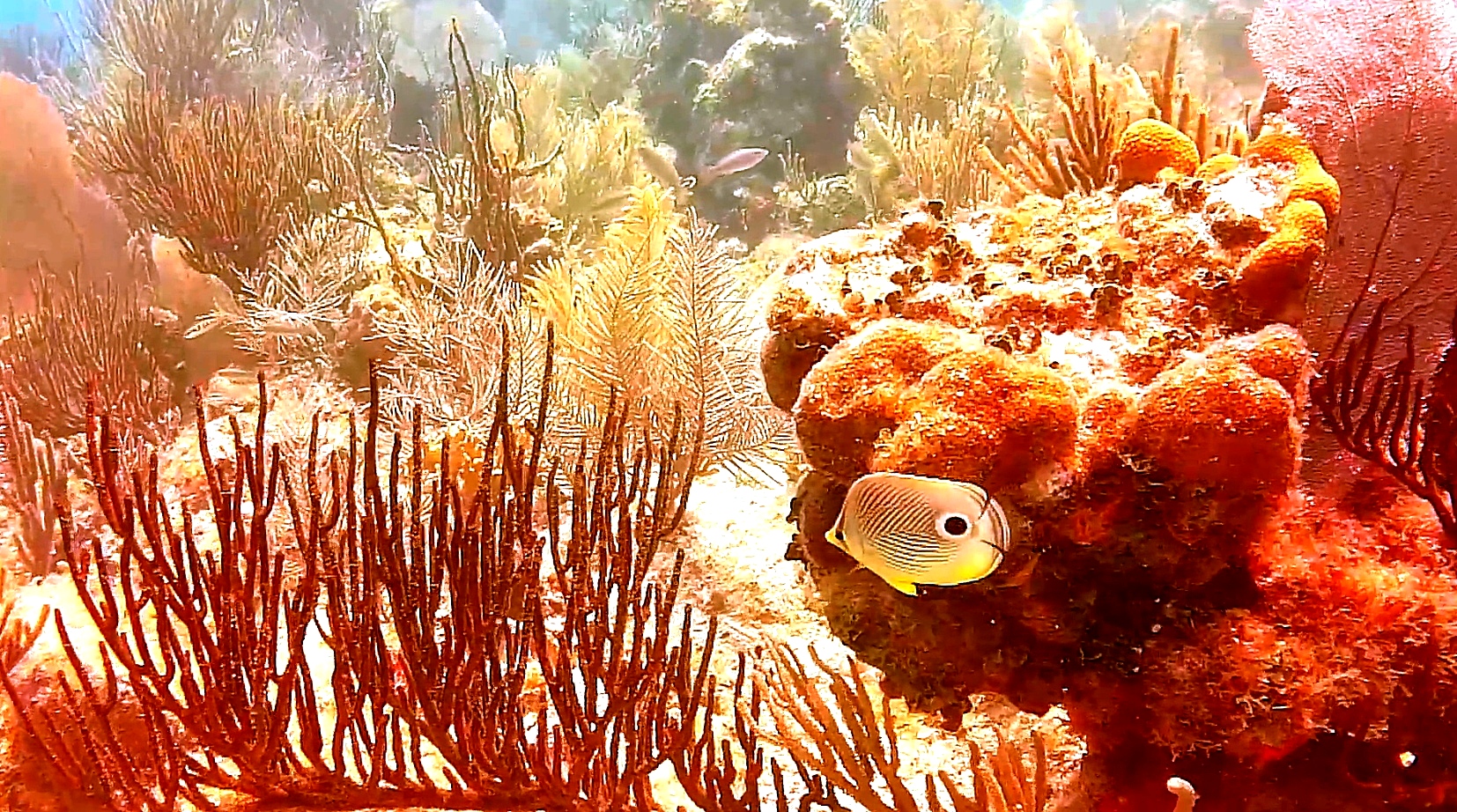
I like to take videos of swimming through coral valleys, with fish and other critters hanging out in the coral. Most people don’t free dive, so don’t see the things I see unless they are scuba divers. So, I like to share the cool pictures and videos so those folks
can
see how awesome it is under the waves, and perhaps give a sense of what coral bleaching is all about. To do that, I have to have a good underwater camera.
Over the years I have mainly used the AKASO Brave 7 4K30FPS 20MP WiFi Action Camera, because I was too cheap to get a GoPro.
Now, if I was to get an underwater camera, I would get the DJI
Osmo Action 5 Pro. Here is a very good review of the DJI from our friends at TropicalSnorkeling.com. But before I buy the DJI, I
have
one more trick up my sleeve – an underwater housing for my Samsung S25 Ultra, and use my AKASO as a backup.
I was all set to buy the DIVEOLK SeaTouch 4 MAX PLUS Underwater Housing, for a price of about
$240.00. But then I thought, what if I don’t like using the housing? What if it doesn’t work the way I expect? I’m out $240. So, I looked around for a similar product that didn’t cost as much. Bingo, I found this for less than $40. It gets good reviews and doesn’t leak. I tested in a bucket of water overnight with no issues.
Rod's Recommendation: If you want a straight up underwater camera, get the DJI
and buy a waterproof case for it. Or, you might want to try an underwater
housing for your phone.
Weight Belt
Yes, a weight belt, as in helps you sink into the water. If you are like Marg and tend to stay on the top of the water and dive only occasionally, you don’t need a weight belt. But if you are like me and like to free dive (sometimes 30 feet or so) to get a good
look
at something cool, then a weight belt really helps.
You really need to be careful and know what you are doing when using a weight belt. Read this very helpful article from our friends at TropicalSnorkeling.com: Snorkeling Weight Belt – How to Choose and Use Safely. I read this article before getting my weight belt and if you plan on getting one, so should you. One of the most
important things to have with a good weight belt is a quick release buckle in case you need to get it off your body fast and float to the top.
I am over 6’1” and weigh just under 200 lbs. Frankly, for an old fart, I am pretty solid – I pump iron, you know. My body fat is pretty low. Still, when in the ocean, I float like a cork. If I don’t use a weight belt to help me stay under, I tend to use
all
my energy and oxygen fighting just to stay beneath the surface. Enter the weight belt.
I have found that if I put 6 to 8 lbs. of lead in a weight belt (you can also use a belt with pouches and put sand in zip-lock pouches), it helps me find a good neutral buoyancy at about 15 feet. That means, I won’t rise to the surface without kicking at that depth. Most
of
my free dives are 15 feet or less, so that works out about right.
There are many factors to consider with a weight belt: wearing a wetsuit or not, you weight and BMI, how deep do you want to go, etc. I am still learning about weight belts and free diving, so take my advice with a grain of salt. I plan on taking a course soon, so will get
back to
you as I learn more.
Rod's Recommendation: I use this MOOCY 4-pocket weight belt. I have two 3-pound lead bags. If I need more weight, I use sand or rent/borrow lead weights from a dive shop.
Again, be very careful when using a weight belt. Know what you are doing and
don’t be like me – that is, take a class before you use a weight belt.